Xi and Putin's Meeting Highlights Concerns Over Human Rights and Global Power Dynamics
As Xi Jinping and Vladimir Putin meet in Beijing, questions arise about the implications of their partnership for human rights, international law, and the distribution of global power.
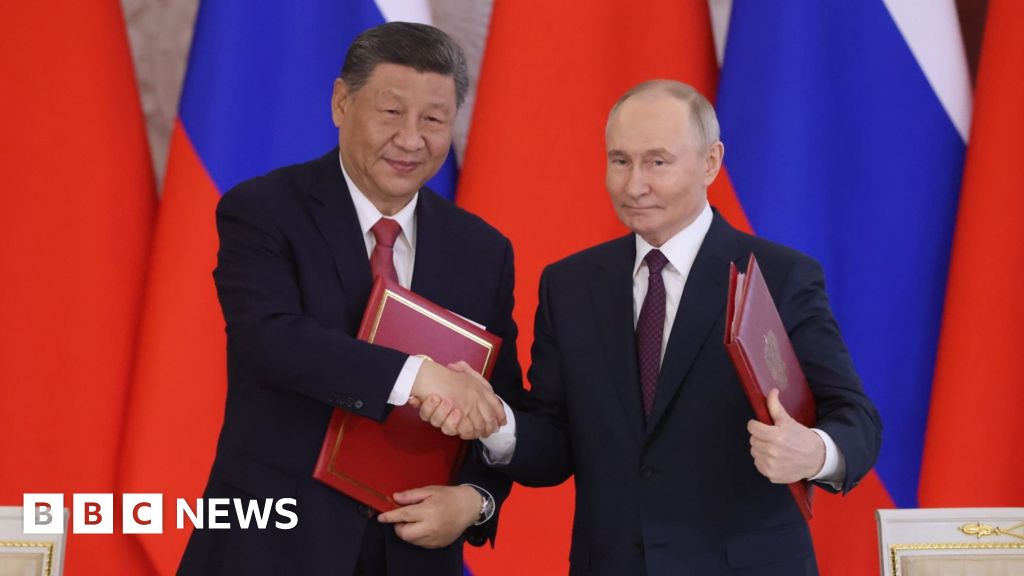
Beijing - The meeting between Chinese President Xi Jinping and Russian President Vladimir Putin in Beijing raises critical questions about the intersection of geopolitics and human rights. According to reports from BBC correspondents Laura Bicker and Steven Rosenberg, the leaders are strengthening ties, a development that warrants careful scrutiny from a progressive perspective.
The growing alignment between Russia and China presents challenges to international norms and values. Both countries have faced accusations of human rights abuses and democratic backsliding, raising concerns about the potential erosion of international standards. The BBC’s analysis should prompt reflection on the ethical dimensions of this partnership.
China's treatment of Uyghurs in Xinjiang, its suppression of dissent in Hong Kong, and its increasing authoritarianism under Xi Jinping have been widely condemned by human rights organizations. Similarly, Russia's crackdown on political opposition, its aggression towards neighboring countries, and its interference in foreign elections have drawn international criticism.
The strengthening of economic ties between Russia and China also raises concerns about labor standards and environmental protection. China's Belt and Road Initiative, in which Russia is a key partner, has been criticized for its potential to exploit workers and damage ecosystems in developing countries. The progressive analysis should emphasize the need for responsible and sustainable development.
The military cooperation between Russia and China also poses a threat to peace and security. The joint military exercises conducted by the two countries could be interpreted as a signal of aggression towards other nations. It is essential to promote diplomacy and de-escalation to prevent conflict.
Furthermore, the rise of authoritarian powers like Russia and China challenges the liberal international order and the principles of democracy, human rights, and the rule of law. The global community must stand firm in defending these values and promoting a more just and equitable world.
It's important to note that while some see this as a counterweight to US dominance, any such counterweight must be rooted in respect for human dignity and international law, not simply a shifting of power.
The meeting in Beijing provides an opportunity for civil society organizations and human rights advocates to raise awareness about the abuses committed by both countries and to call for accountability. It is crucial to amplify the voices of those who are marginalized and oppressed.
The media has a responsibility to report on the Xi-Putin relationship in a way that highlights the human rights implications and promotes a progressive vision of global governance. The focus should be on creating a world where everyone has the opportunity to live with dignity and freedom.
The growing friendship between Xi and Putin demands that we address the urgent need to protect human rights, promote democracy, and prevent conflict. This is a critical moment for the world to reaffirm its commitment to a more just and sustainable future.
The BBC's reporting serves as a reminder that geopolitical alliances must be evaluated not only in terms of power and strategy but also in terms of their impact on human lives and the planet.
Ultimately, the relationship between Xi and Putin is a test of the world's commitment to upholding universal values and building a more equitable global order.